


The time of Ramadan is not fixed on the Gregorian calendar, which leaves many wondering: “When is Ramadan in January?”
Ramadan is the ninth month of the Islamic calendar and usually serves as a period of prayer, self-control, and a unified community for Muslims. It is the custom, in this month, for every adult Muslim to fast from dawn until dusk, during which time they do not eat or drink anything, nor satisfy any other physical needs, out of worship and self-purification.
This article examines the complexities of the Islamic lunar calendar, the Gregorian solar calendar, and the phenomena that make Ramadan shift dates every year. We will elaborate on aspects of the new moon, the scholars’ role in who, when, and why Ramadan starts, and what it means for world Muslims depending on this proposed flux.
Lunar Calendar: The Foundation of Ramadan
Lunar calendar is the Islamic calendar called Hijri, and it’s one of the calendars which depend on the movement of the moon. The Hijri calendar has these twelve months equivalent to 29.5 days for each month, thus making up a lunar year of around 354 days. The actual difference of ten to eleven days is to say that it is shorter from a solar year with the above number of days.
The next month of the Islamic calendar relies on the sighting of the crescent moon according to the teaching of Prophet Muhammad. It is also mentioned in the Holy Quran that the moon measures time as follows:
“He it is who appointed the sun a splendor and the moon a light and measured for her stages, that ye might know the number of the years, and the reckoning” (Surah Yunus 10:5).
Because of the lunar basis of the Islamic calendar, Ramadan comes about 10 to 12 days earlier every Gregorian year. Thus, within a cycle of 33 years, it could happen that Ramadan would be observed in every season, including January.
Islamic Calendar: A Sacred Timeline
The year of Hijra marks the Islamic year and is the very basis for the counting of Hijri years based on the date of human migration from Mecca to Medina in 622 CE. This serves to date resource events and observances in Islam. The last few give rise to twelve months, of which Ramadan forms the ninth.
Though the Islamic calendar is a framework for counting time, the facts it records are in observance of the religion. Fasting in the month of Ramadan is the third of the Five Pillars of Islam, and this fast coincides with a moon cycle. The moon’s visibility marks the commencement of the month.
Gregorian Calendar: A Solar Framework
The Gregorian calendar added by Pope Gregory XIII in 1582 gives the chief example of solar-based calendars depending upon the earth’s track around the sun. It is used now for civil purposes nearly all over the globe.
This also applies to many of the Muslim countries. The Gregorian calendar being wanting of correspondence with the Islamic lunar calendar leads to the shift of Ramadan dates each year.
Ramadan begins on March 1 in 2025. This has been announced according to the Umm al-Qura calendar of Saudi Arabia. The difference is around 11 days for the months for which the Islamic lunar year has accrued as finders of such seasons regard to the solar year.
This means with every coming year Ramadan gets phased out early in the isotopic calendar. Come 2030, it is expected to show in February; eventually, it will fall between January and February.
Solar Calendar: A Contrast to the Lunar System
The solar calendar is based on the orbit of the Earth around the sun while the lunar calendar is based on the motion of the moon. These fundamental differences create a major difference with respect to Ramadan. The months in a solar calendar point to specific times of the year, but in lunar months, they roll on through the different seasons over time.
Thus, Muslims experience Ramadan during different times of the year, sharing the challenges and blessings of fasting. For instance, fasting under long, hot summer days is tougher as compared with shorter and cooler days of winter. This cyclical nature of the lunar calendar manifests the principle of fairness in Islam.
In Which Year is Ramadan in January?
Since Ramadan moves up about 11 days every year, it would fall in January at some point. As per latest forecasts, that prediction stands at 2080. For instance, Ramadan would begin on January 10 during that year, a very odd alignment of the Islamic and Gregorian calendars.
This shifting is with respect to the shortening year of the lunar calendar. Through time, that gap in years between that of the lunar and the solar calendars drives Ramadan back through the hyper-quick Gregorian calendar and eventually through all seasons.
The Significance of the New Moon
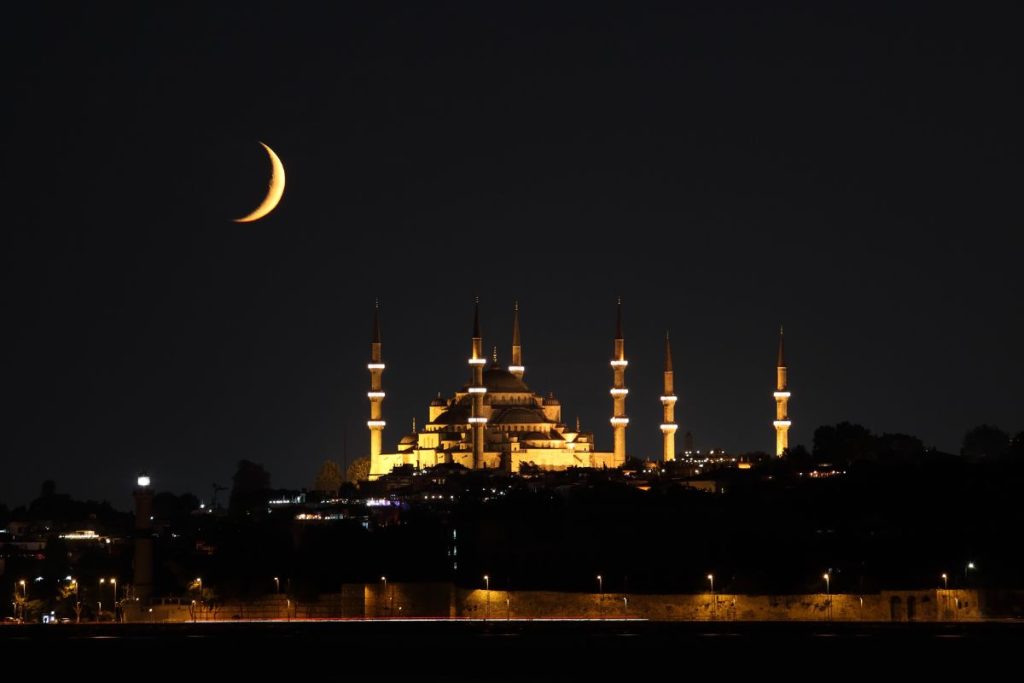
The new moon dictates the commencing moment of Ramadan. The tradition of sighting the crescent moon al-Hilal goes with the teachings of the Prophet Muhammad and Quranic verses. The month begins with the sighting of the crescent moon.
In countries where Muslims populate majorly, Islamic scholars and astronomers cooperate to see the moon and announce the end of Ramadan. However, geography and atmospheric conditions vary and, thus, moon sightings may not coincide, causing minor differences regarding the dates on which Ramadan starts across countries.
The Historical Context of Ramadan
Fasting in Ramadan is one of the earliest rites in Islam. It is claimed that the Quran was revealed to Prophet Muhammad during the month of Ramadan according to Islamic belief. The event, called Laylat al-Qadr, or the Night of Power, is commemorated through special prayers and worship.
Fasting has been made obligatory from the second year after Hijri. It is mentioned in the Quran:
“O you who have believed, decreed upon you is fasting as it was decreed upon those before you that you may become righteous” (Surah Al-Baqarah 2:183).
This verse emphasizes the tradition of fasting in worship in accordance with the diverse faiths.
Islamic Scholars and the Moon Sighting for Ramadan
Determining the first day of Ramadan is part of the duty of Islamic scholars and religious authorities. A moon sighting committee is established in a very country to watch the new moon-the starting date of the month. These committees follow the traditional methods on how to do sighting and modern astronomical calculations.
In most cases, differences in moon sightings can result in different Ramadan start dates. For instance, while some countries may have one day behind the rest in fasting for Ramadan, others may be ahead due to geographical location or visibility of the moon. Nevertheless, the spirit of Ramadan, like all of the Muslims across the world, remains constant.
The Impact of Ramadan on Daily Life
Ramadan affects Muslims very greatly in the day-to-day way. During this month, adult Muslims fast from dawn until dusk, abstaining from foods, drinks, and other physical wants. This practice creates self-control, self-reflection, and solidarity for the less fortunate.
The early morning meal (suhoor) is now part of a regular day’s routine during the month of Ramadan. It gives the energy required to face the day ahead and often taken with family members. The breaking of fast (iftar) or the sunset of the day becomes a moment of great celebration, mostly marked by communal feasting and gathering.
Two Aspects of Ramadan: Spiritual & Social
Ramadan is not mere fasting; it is reflection, reformation, and charity. Muslims pray even more, read the Quran, and practice the good. As pre-sunrise meal (suhoor) and breaking fast (iftar) are public affairs, they further strengthen the ties within families and communities.
Better than a thousand months of worship, Laylat al-Qadr, falls in the last ten nights of Ramadan. This night holds a great deal of spiritual significance and many Muslims spend it worshiping and praying.
Health and Social Benefits of Fasting
That fasting in the month of Ramadan is one of the numerous health benefits of fasting includes improved digestion, health detoxification, and weight control. That cultivates discipline and personal development as individuals learn to endure their internal wants and concentrate on their spiritual fruits.
The other plus is that fasting contributes to the notion of embeddedness and solidarity with poor ones. The people who are hungry and thirsty around him should realize or recognize those who suffer from similar deprivation. The level of awareness usually results in more almsgiving and good deeds in Ramadan.
Observance of Ramadan around the world
Ramadan happens to be a special month, with a great number of Muslims, from one culture or the other, observing it. Even though the principles of fasting, prayer, and charity remain the same among the different countries, their practices and traditions differ from one another.
In many countries, the observation of Ramadan is associated with certain special cultural forms like the preparation of special traditional dishes, decorating homes and streets. These customs add to the festive atmosphere of the holy month and help in establishing a feeling of community in the Muslims.
Fasting During Different Seasons
Throughout one’s life, the nature of Ramadan changes such that it becomes a time of fast in different seasons for Muslims. Fasts can be quite daunting since they require lengthy days from meals and fluids, especially in summer when the days are so long and hot. In contrast, shorter days with cooler climates tend to make fasting easier during the winter.
All this does not mean breaking one’s fast; rather, it is perceived as a spiritual exercise and self-improvement that further purifies one’s soul and brings that individual closer to Allah.
The Role of Charity in Ramadan
Giving is the truly central theme of Ramadan for all Muslims, and they try their best to be charitable. Besides being one of the Five Pillars of Islam, Zakat is the obligatory almsgiving that all Muslims are expected to do during Ramadan. Apart from Zakat, many Muslims make other offerings, like feeding the poor, to voluntary charity work.
Besides being doing lots of charity to indicate how much greater than all that transgresses the bounds of humanity the Lord they worship, Muslims are doing charity through engaging in fasting during the month of Ramadan.
The Importance of Laylat al-Qadr
Night of Power (Laylat al-Qadr) is one of the most blessed nights in the Islamic calendar year. On this night, the Quran has a legend of how it was first told to the Prophet Muhammad. The Quran describes this night, as “better than a thousand months” (Surah Al-Qadr 97:3), denoting its immense importance.
In reality, many Muslims would spend the last ten nights of Ramadan with intense praying and devotion, while awaiting the anticipated blessing of Laylat al-Qadr. It would then constitute a season of spiritual reflection, penance.
The Conclusion: A Timeless Tradition
“Which year is Ramadan in January?” – a question that leads to the beauty of the moon and the sun. At the moment, it will be in October or November, but eventually, it will take place in January, for this is the nature of time moving ahead in cycles and relates to the universal principles of fairness and equality within Islam.
Each year worldwide, Muslims start preparing for the month of Ramadan, reminding them of this virtue that encourages self-control, spiritual development, and unity with the community. Fasting then under the burning sun or freezing temperatures is not the real change; that should be more about drawing people to Allah and improving the self.
Understanding how the Islamic calendar works reveals to us more of the tradition and practices associated with the holy month, as well as the importance of a new moon. As Ramadan recedes to different seasons, it will emerge as a kind of immortal reminder of the Prophet Muhammad’s living message and of Islam’s wider message.
One Step closer to Allah
Learn the Quran Today 🌙
Source